Dearest friend,
I’ve been wanting to write this for a while now — partly to make sense of the season I’ve been walking through, and partly because, probably, I’m not the only Christian who has wrestled with this.
An Exhausting “Friendship”
There’s a friend in my community I was growing close with. She is loud, fun, full of personality — the kind of person who can bring color into a room. When I went through a painful season a few months ago, she offered prayer over me, showed care for me, and gave company in moments of loneliness. I appreciated her presence.
But over time, something shifted.
As we grew closer, she began opening up more about her struggles — work stress, emotional battles, disappointments, spiritual hurt. I wanted to be there for her. I prayed and listened. But slowly, our friendship began to revolve around her burdens alone.
Every week, she came with the same weight, the same complaints, the same cycles. Every prayer session felt like pouring into a bottomless cup. And every time I offered biblical encouragement or gentle advice, she often accepted it, but only to bring up the same worries, the same patterns the next week.
She began repeating her cycles, and I began to feel as though I started carrying them as my own. I was struggling with my own loneliness, but I couldn’t share it—there was never enough space for my worries when hers filled every moment.
I kept thinking, I need to be there for her. I need to listen. Knowing the kind of background she came from, I knew I needed to give her a lot of grace in her behavior. I really wanted to learn how to be a good friend to her—to serve her well.
But slowly, I started feeling guilty when I needed rest. I started thinking “maybe I’m not being a good enough friend” for thinking that way. I started mistaking exhaustion for compassion. I started thinking, “If she was the same friend who once helped me, then why couldn’t I seem to help her?“
That guilt ate at me quietly. But guilt is a terrible guide. The Spirit is a better one.

The State of “Friendship”
Because we were in the same lifegroup, there were moments when I left our meetings feeling more drained than encouraged. Instead of bearing each other’s burdens, it felt like I was carrying hers alone while mine remained untouched.
Whenever I tried to speak truth, she became a little colder or offended. I began to see that if my words weren’t phrased exactly the way she would have wanted it to encourage her, she pulled back, replying in group chats but not to my direct messages.
There was a moment when I spoke a hard truth, and it caused her to pull away. She had confided in me about her night at a club where things had turned physical, and in the middle of it she ended up vomiting on the boy she was kissing. She told me she felt humbled by God, but also questioned why He had allowed it to happen. I felt the need to remind her that God has given us the free will to obey or disobey, and that it was His grace that has protected her by stopping things (by vomiting) before they escalated further. After that, she stopped replying to my messages—though she continued responding in our group chat. Only days later did she send a short message of thanks that felt… insincere. I was honestly bewildered. The confusing burden in my heart deepened.
There came a point when everything felt overwhelming. I started leaving lifegroup feeling more burdened by the emotional weight she poured out, and even our day-to-day conversations became mostly about her frustrations with other friends or her crushes on boys. Sometimes she would send voice notes filled with prayer and encouragement, and I genuinely appreciated them. But over time, I couldn’t help but wonder about the sincerity of it, especially when her actions often didn’t reflect the things she prayed or spoke about.
Many times we attempted to bring it to Jesus, but it seemed like she wasn’t receiving any of it—and I found myself feeling responsible to carry what she refused to surrender. Whether it was her accepting Scripture at a surface level or my fear of offending her with honest truth again, the heaviness lingered so deeply that I had to take a day off work the following day.
God Spoke
So I spent the next day in prayer. And God, in His faithfulness, began to reveal answers little by little. He gently nudged me through the days to seek guidance through something simple — wisdom from my community. I felt the need to approach my two pastors and a friend with what I was feeling, and discovered that I wasn’t the only one who had experienced moments of hurt in friendship with her.
One pastor quietly admitted that he had also decided to put some distance between them because her behavior was becoming unhealthy — conflict in the church-owned café, resistance to correction, venting frustrations publicly (ranting on Instagram stories with names mentioned) instead of resolving them privately.
After a few days of praying, seeking counsel, and wrestling with guilt that I couldn’t make sense of, I sensed God nudging me to take a step back — not in bitterness, but in love. Not in avoidance, but in peace. Part of me even wondered if cutting her off completely, or quietly warning others about her attitude, would make things easier. But now I can clearly see that those were temptations from the enemy, rooted in division rather than love.
Slowly, God helped me see that the guilt I was feeling came from my own people-pleasing tendencies. Even the pressure I put on myself to “say the right things” came from that same place. Through this whole process, I was learning just as much about myself as I was about the situation.
Light in Christ
We do not fight or flee like the world does (Romans 12:2). Instead, we bring everything into the light of Christ.
God began answering my prayers by showing me two things: first, to bring everything to Jesus; and second, to create healthy boundaries so I wouldn’t be shaped by toxic patterns (Romans 16:17, Proverbs 22:24-25).
Bringing this to Jesus has allowed Him to convict me of my people-pleasing tendencies. I realized how afraid I was of offending her with honesty or truth. What good does it bring to try and please everybody? My role was never to solve someone else’s life, or to constantly keep them happy and satisfied. Of course, I was called to serve them, but it was by loving them, praying for them, reminding them of truth, and then letting God do the changing. Thank you Jesus for this realization. It gave so much clarity and truth to fix my people-pleasing heart, which was probably where my guilt was stemming from.
I also continued praying over these feelings, asking Him for wisdom, and slowly I realized that boundaries aren’t worldly when they’re led by the Spirit. However, they can become worldly when they stem from bitterness, fear, or pride.
Even now, we still meet occasionally. I still greet her warmly on Sundays. When God brings her to mind—or even when the enemy tries to use her name to stir bitterness—I lift her up in prayer and release those feelings to Him. But I’ve learned not to share my deepest matters of the heart with her out of caution. I’ve learned not to let myself be swept into emotional cycles that drain rather than build. I’ve come to realize that it isn’t rejection at all, but it’s simply being wise about how closely I walk with someone who isn’t in a healthy place.
What Next?
So does her hurting others give me the right to judge her? Does it give me permission to speak badly about her to other people? Absolutely not. I have to confess, I have had so many temptations to do so, and have fallen so many times in my own head. God’s grace convicts me, every single time, that those thoughts are not from Him—it’s from the enemy. Whenever I feel that urge rising up, I recognize it as my own self-righteousness, and I choose to release it to Jesus. Only God is the true Judge. He alone is justice. Who am I to condemn someone when I am just as sinful?
Holy Spirit, when I am tempted to speak negatively behind someone’s back, please help me surrender that temptation to God. Please, help me bring these temptation to Jesus every single time.
In God’s beautiful creation, what right do I have to speak slander or malice against someone He has made? Our battle isn’t against people at all, but against the unseen forces at work (Ephesians 6:12). So the right response is not self-righteousness judgement, but prayer—persistent, Spirit-led prayer (Ephesians 6:18).
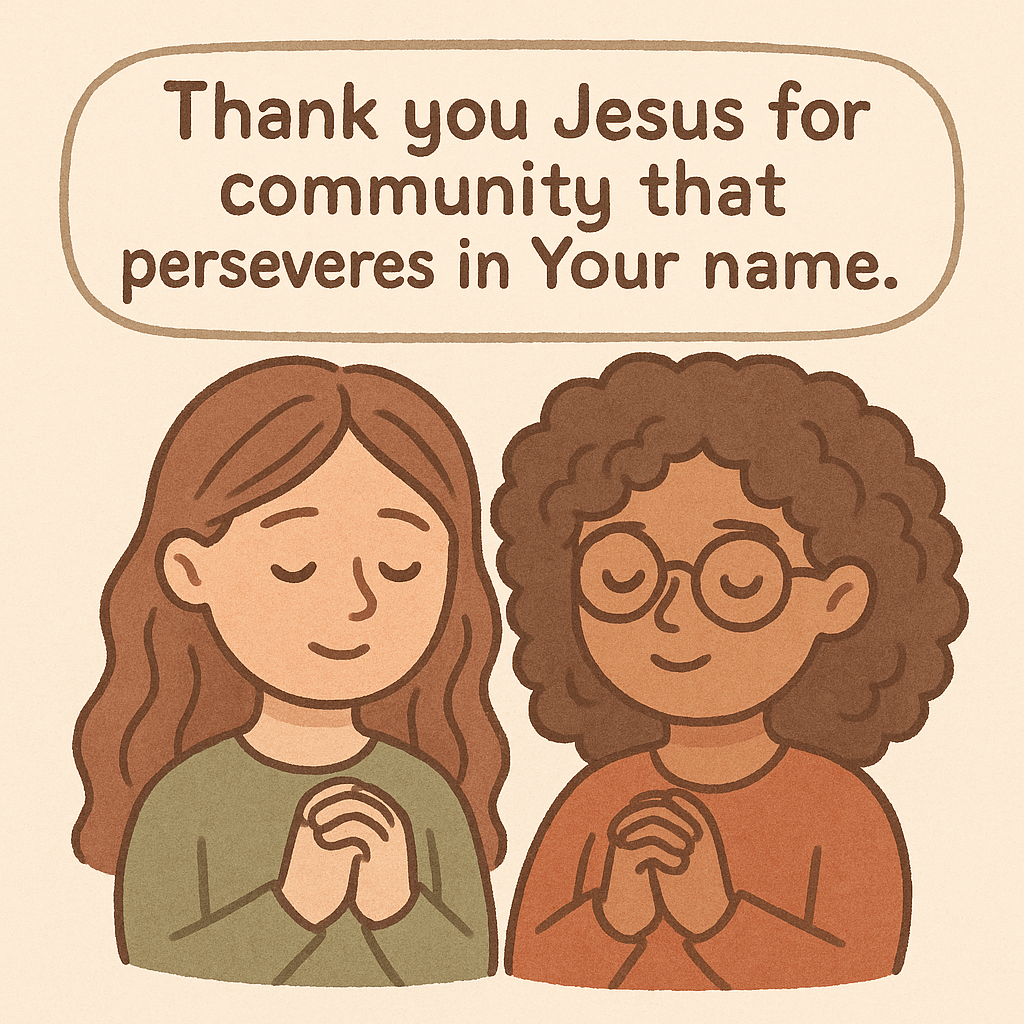
Thank You, Jesus, for walking with me through every step of it. Thank You for showing me how to care for Your people, and receive care from Your people. Thank You for teaching me how to guard my heart from bitterness, and release my heart from bitterness. Thank you for convicting me of my people-pleasing tendencies, and taking on my sense of self-righteousness. And thank You, Jesus, for washing me clean with new mercies every single day.
Prayer
Lord,
Teach us to love with wisdom and courage.
Teach us to set boundaries with humility and grace.
Protect our hearts from resentment,
and protect our friendships from bitterness.
What good is there in pleasing others?
Help us remember that we are here to do Your work.
Strengthen us where we feel weak.
Guide us where we feel lost.
And fill every distance we create with Your peace,
so that in all things,
our love may look more like Yours.
Amen.
 BubbleBabble
Leave a comment